2017 "I Am Ready To Be Me", National Forum of Music, Wroclaw
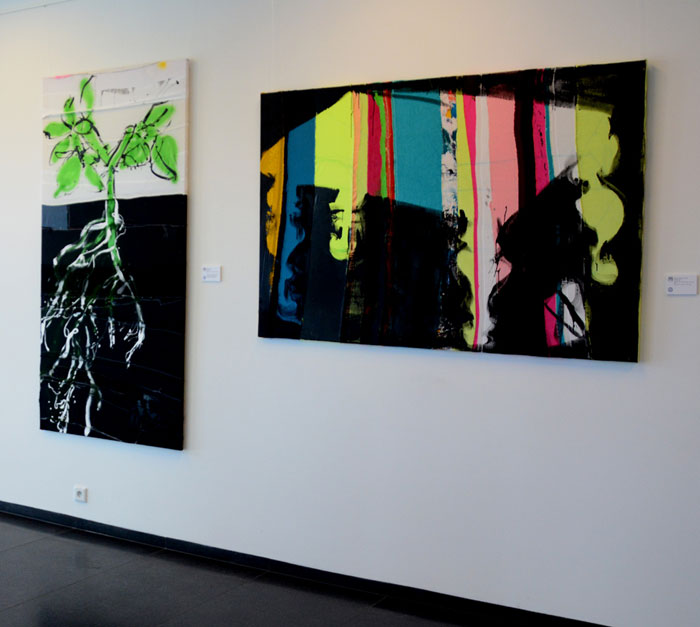
We Live in a Therapy Culture
For the first time in history, someone dares to set up a life.
To dig into our values, goals, and needs.
We discover what we are made of, which maps we carry, which ones we want to create—and we can, quite literally, sculpt our lives as we choose.
The first step is awareness: understanding how the mechanism of the human brain works.
At present, our knowledge remains limited.
The search for a miracle diet for the soul is chaotic. From time to time, a new revelation appears: a new guru, a new method, a new promise.
“All you have to do is…”
And suddenly I will feel genuine satisfaction in my work, in my relationships, within myself.
The search for happiness, in the broadest sense, is reflected in the method behind my series
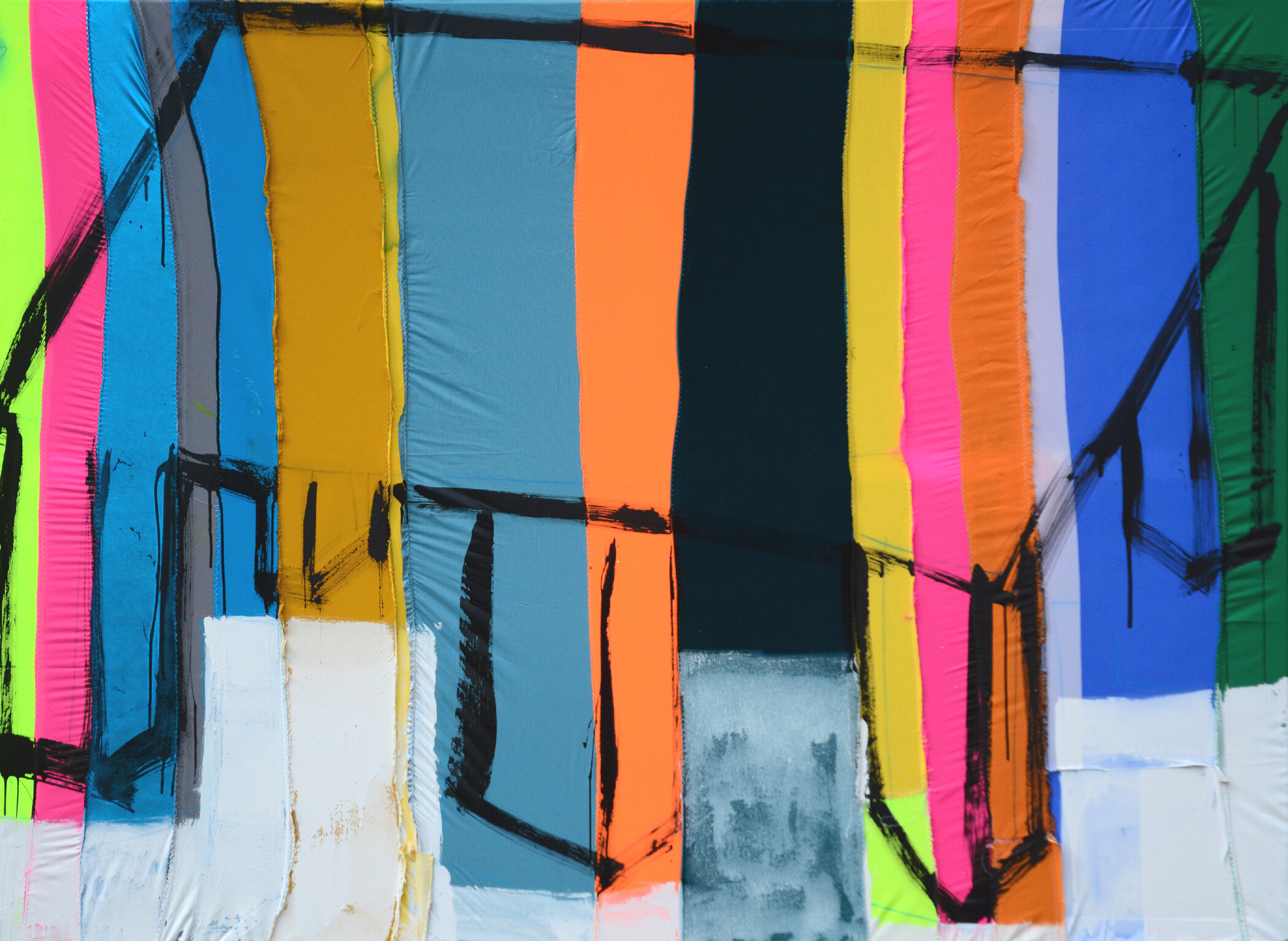
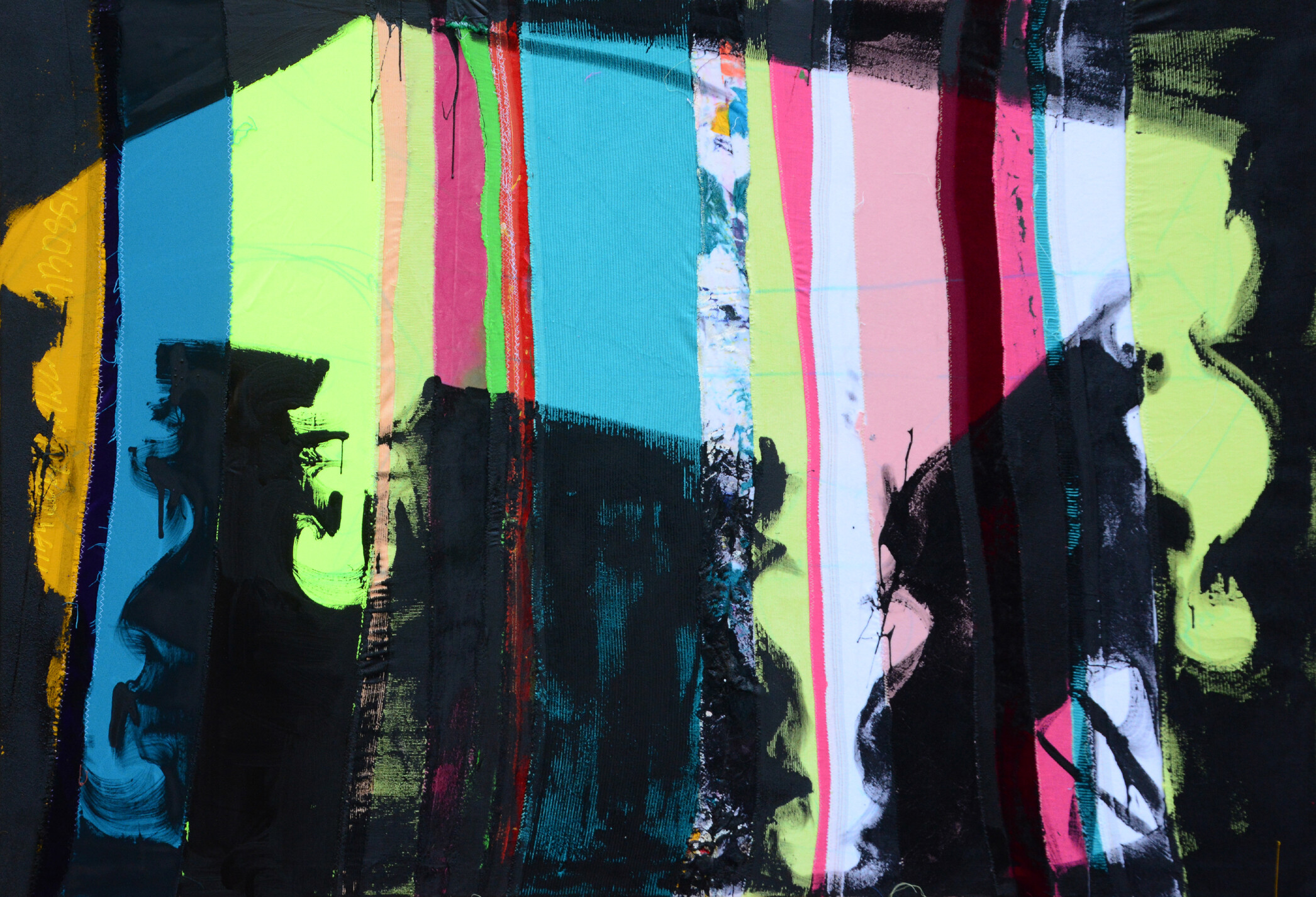
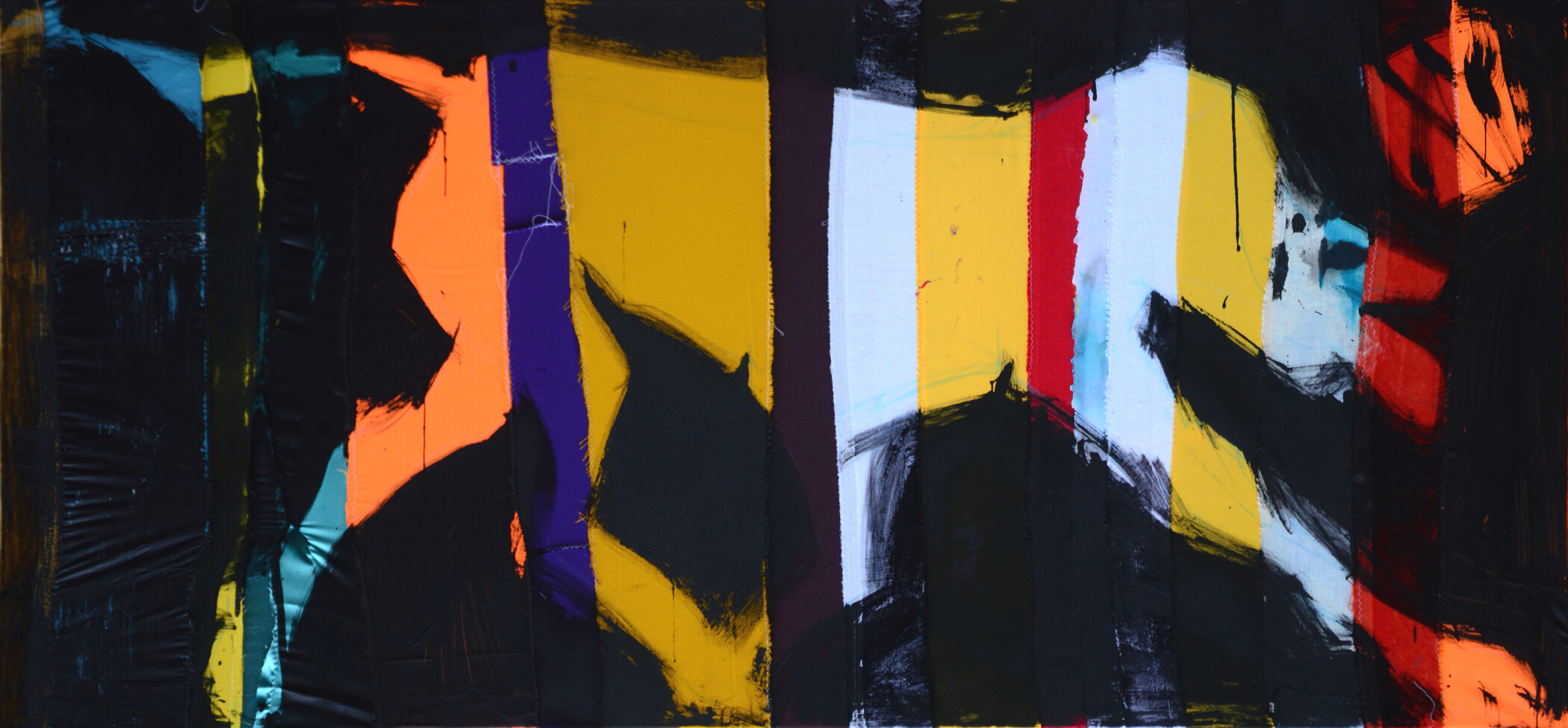
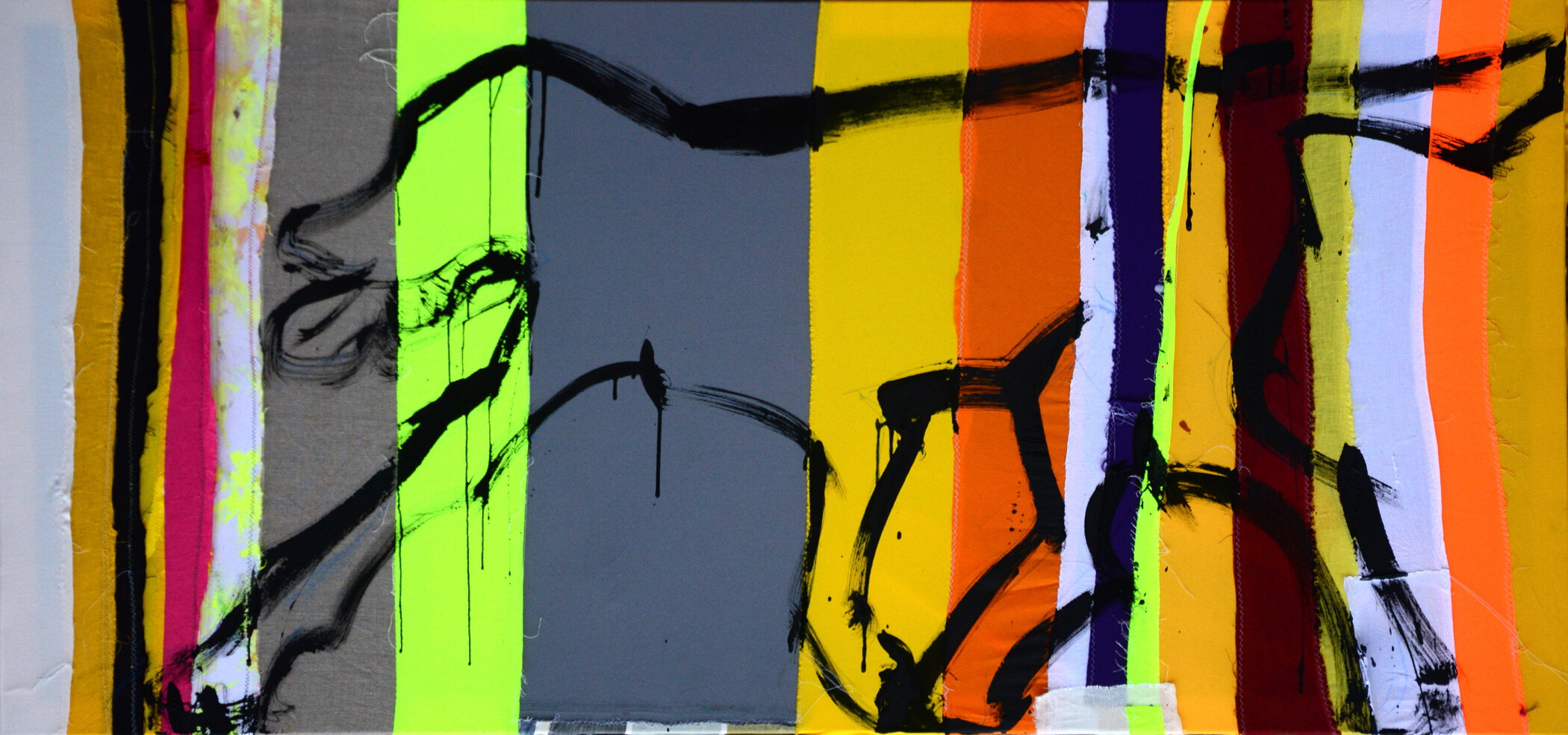
I Am Just Ready to Be Me (after Lauryn Hill).
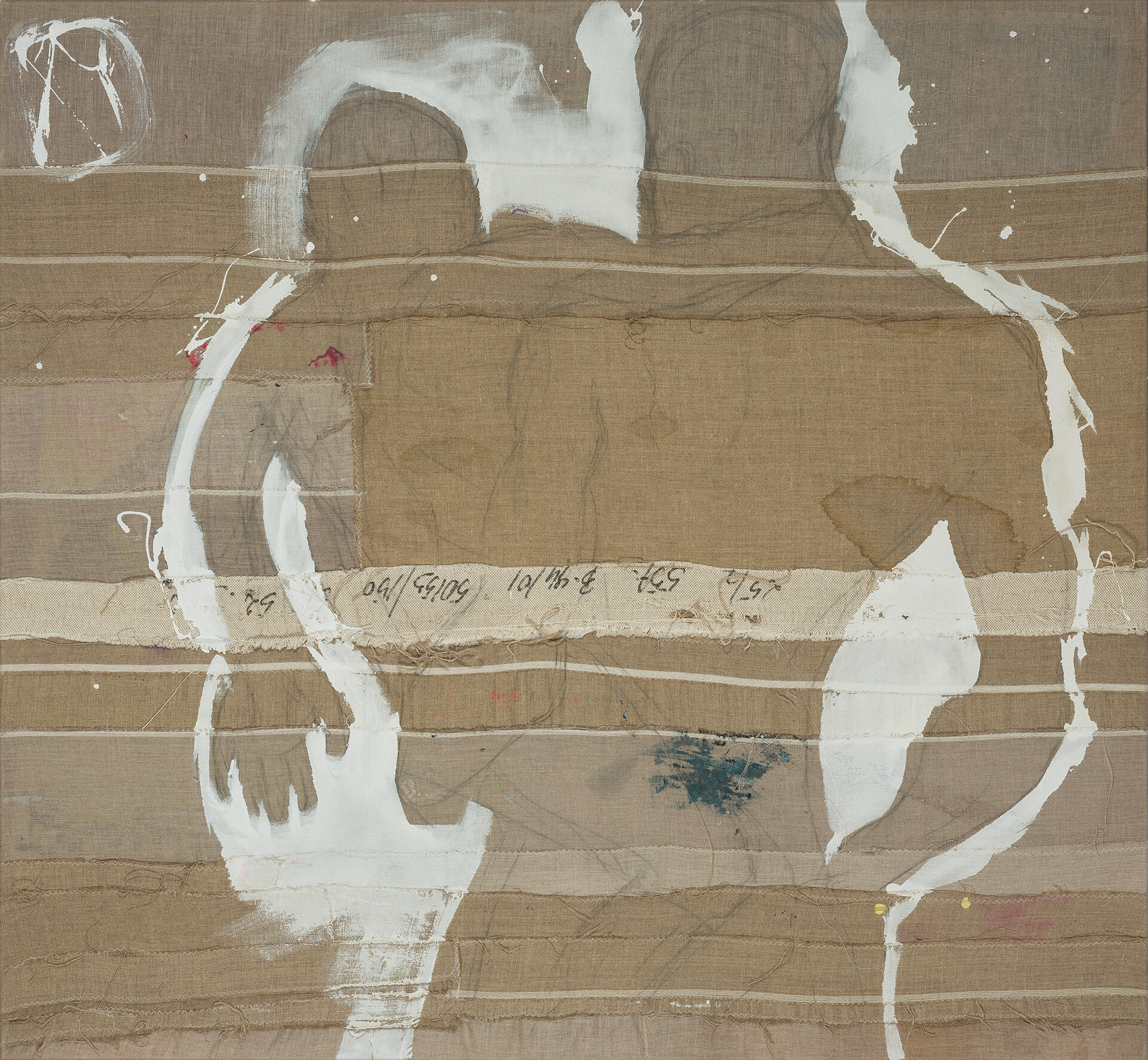
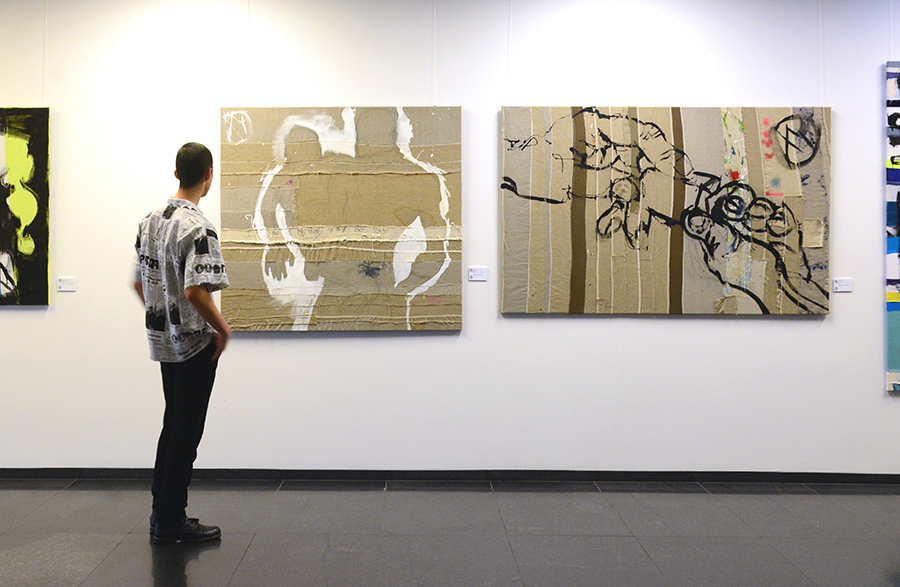
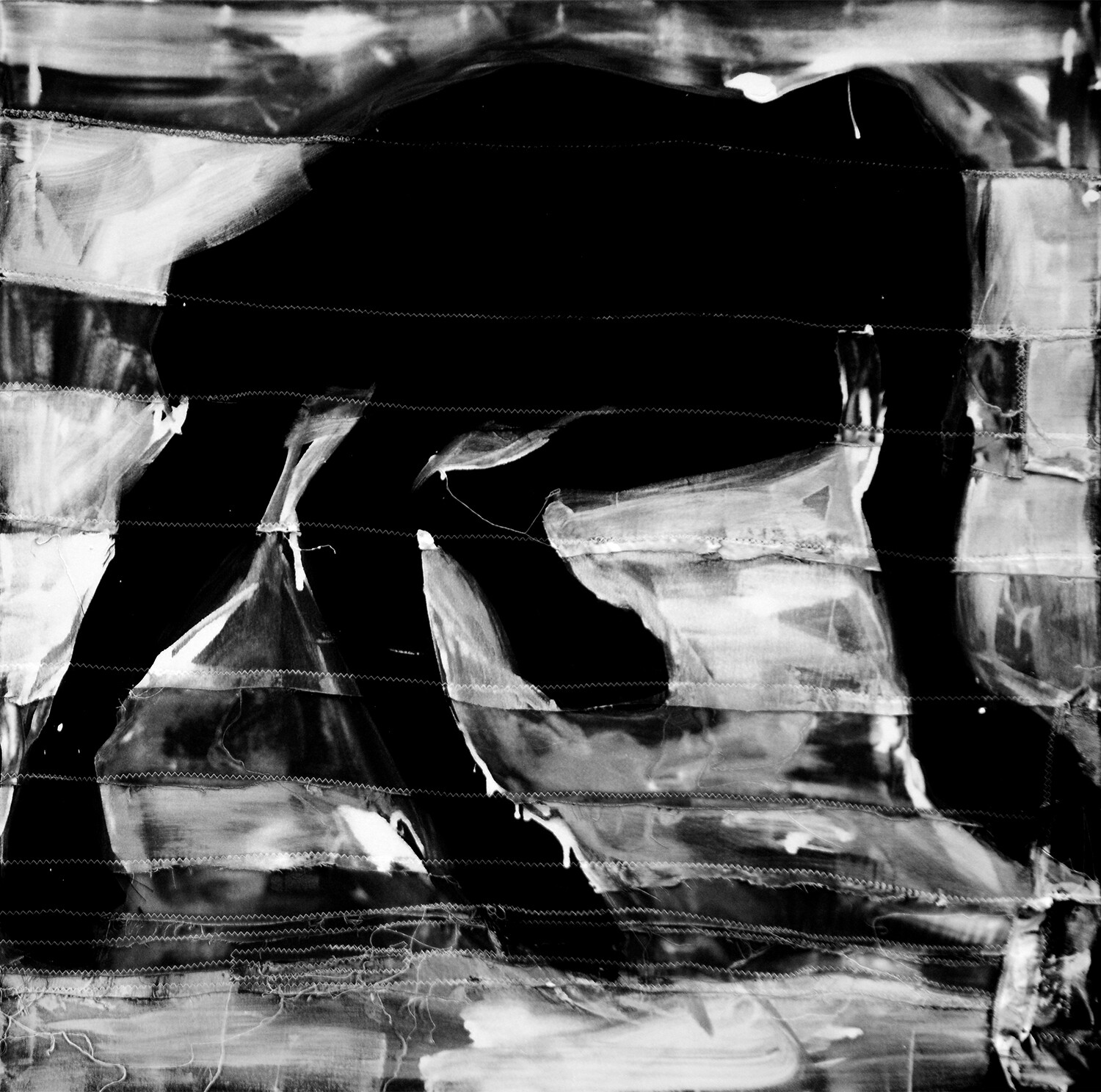
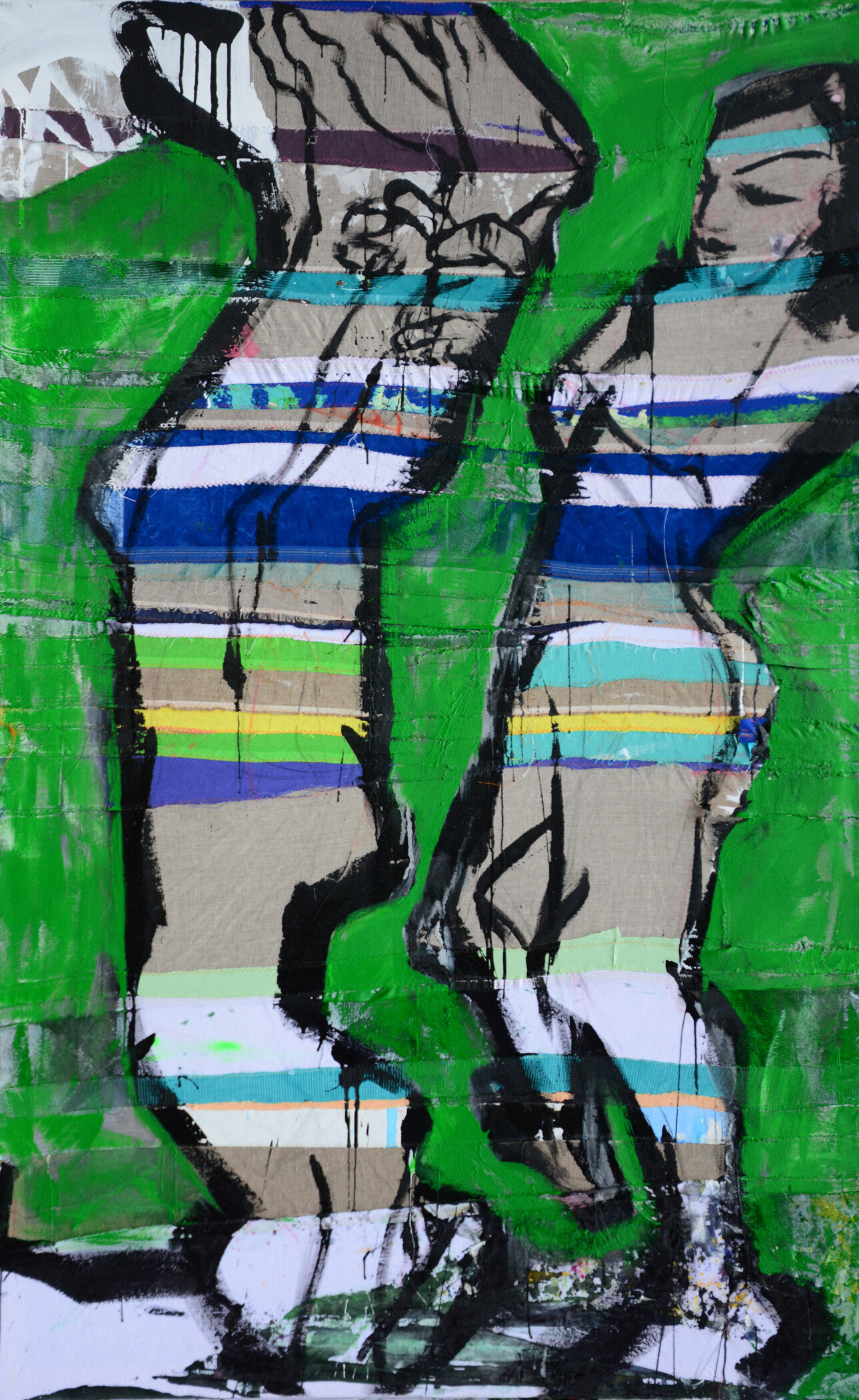
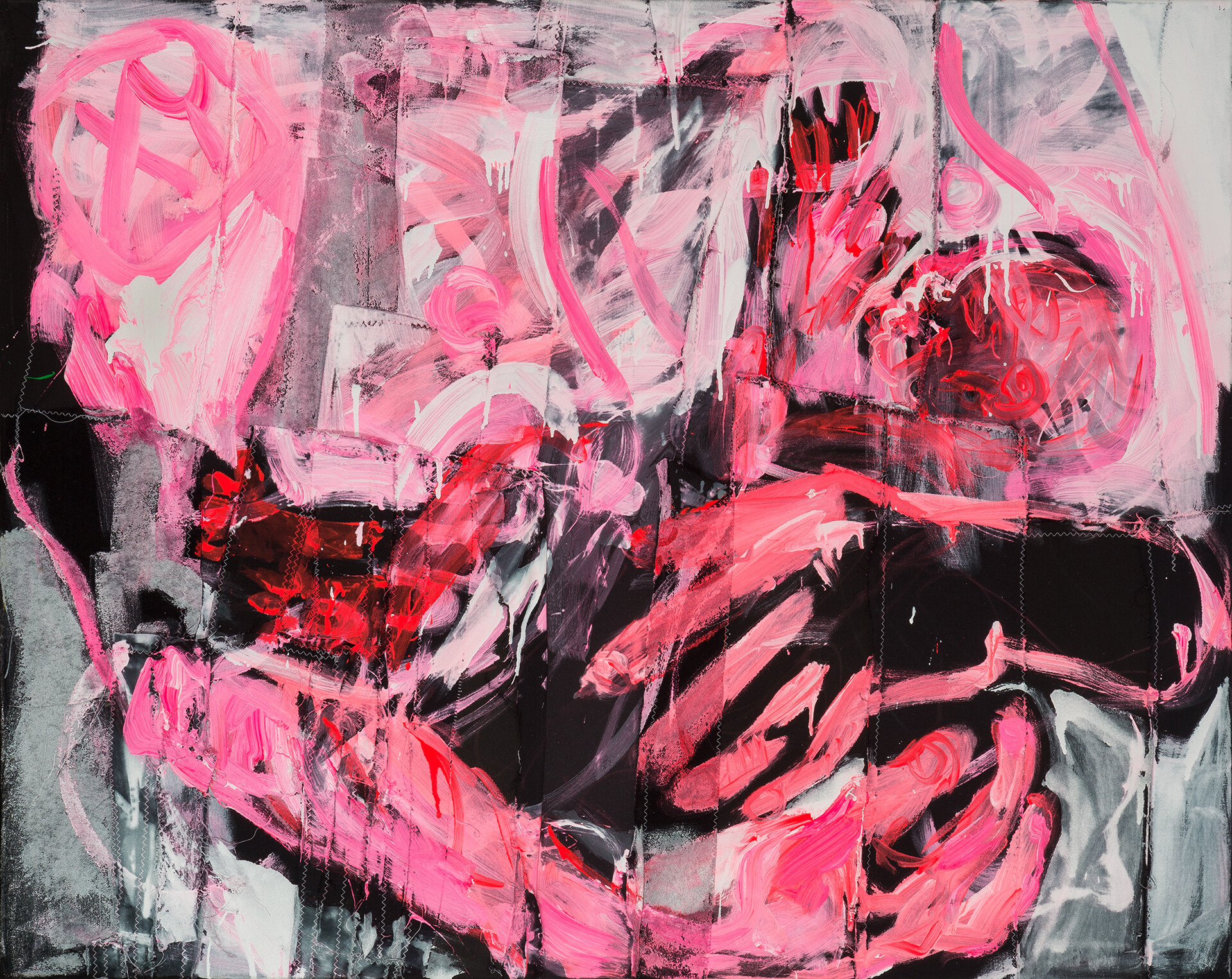
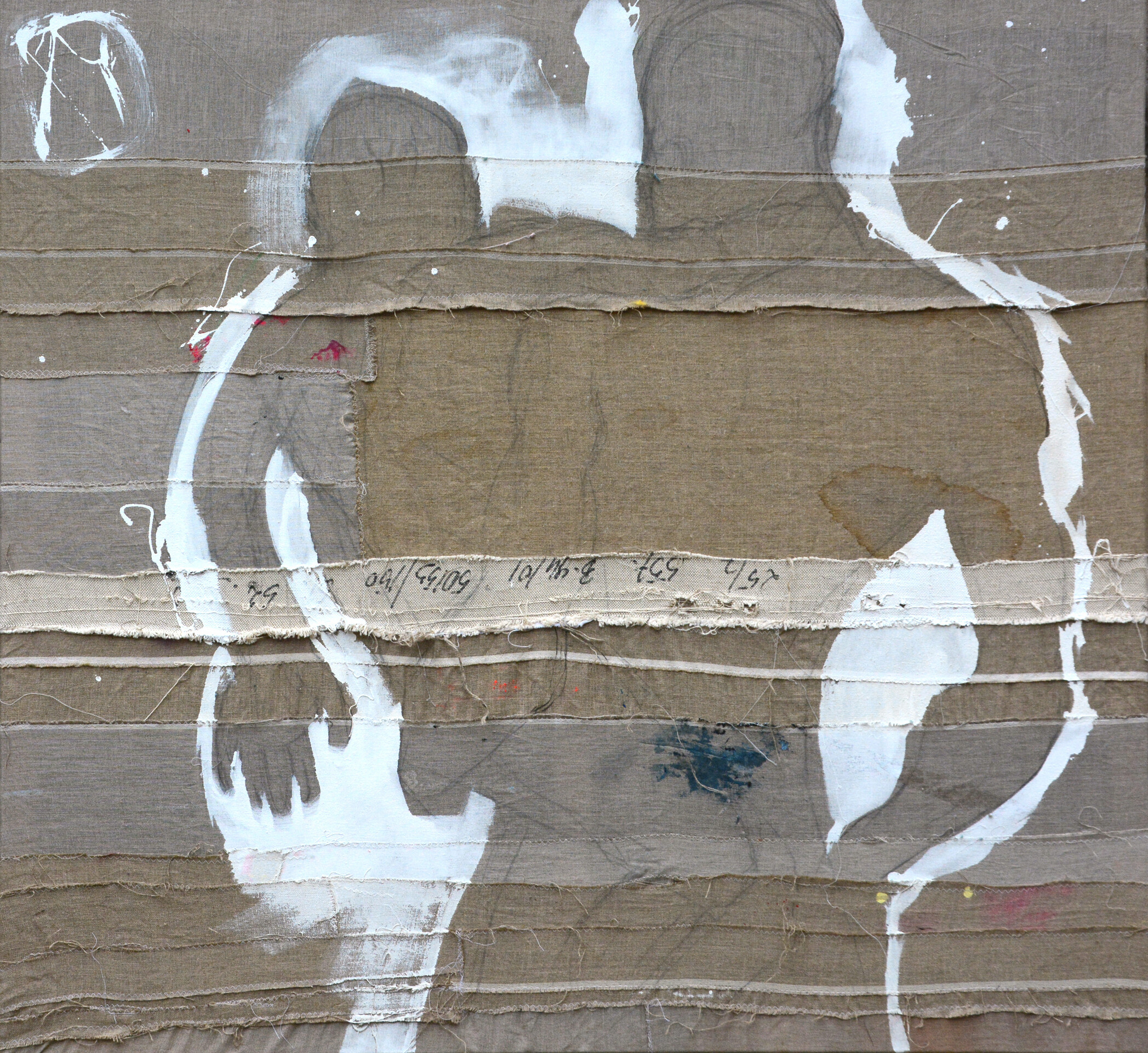
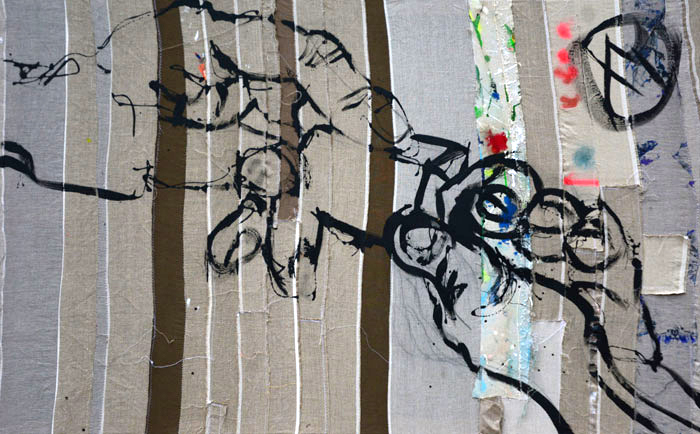
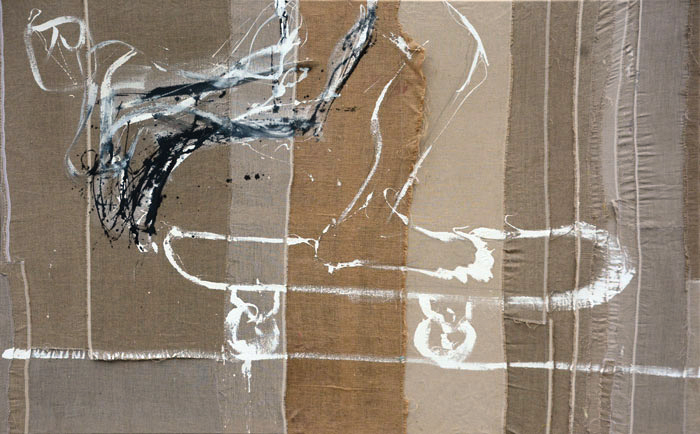
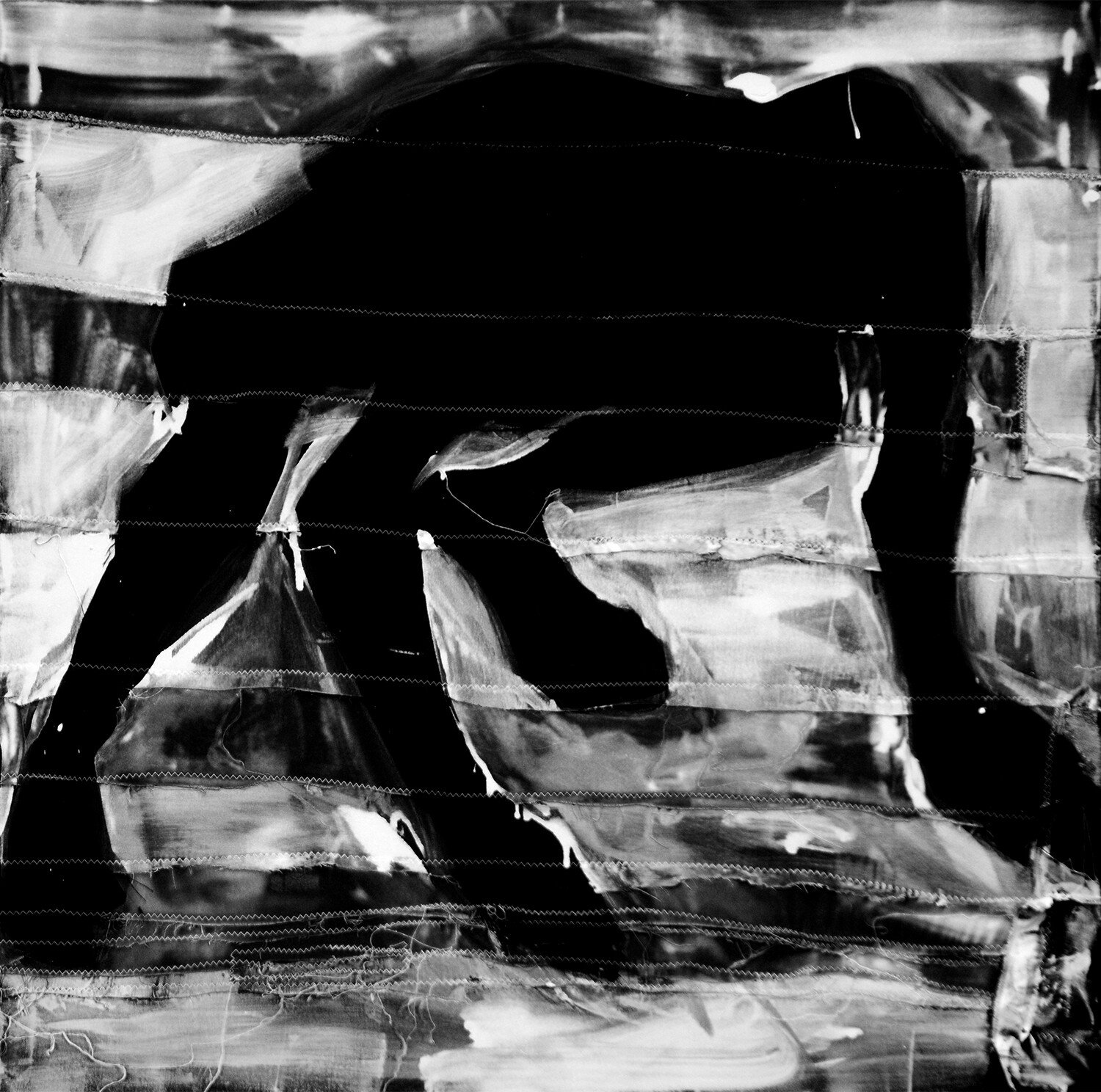
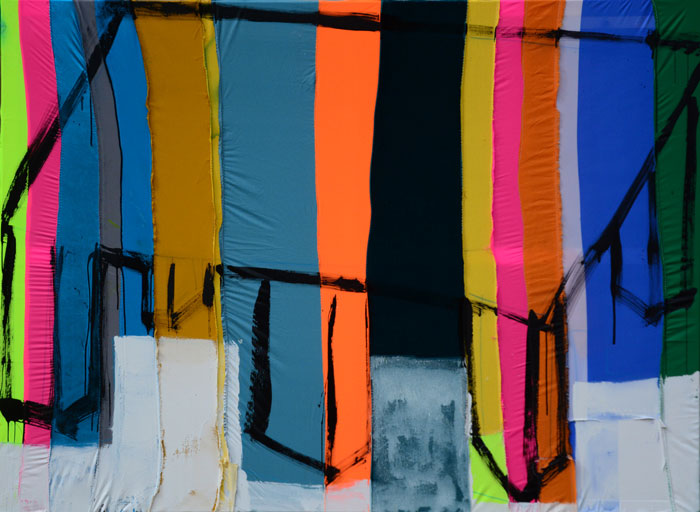
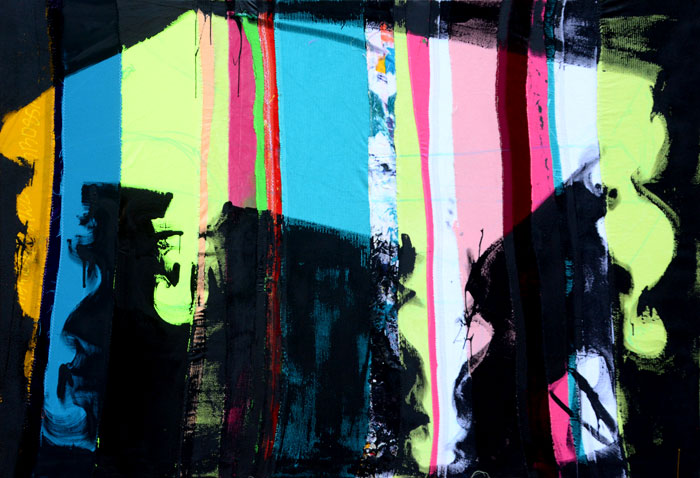
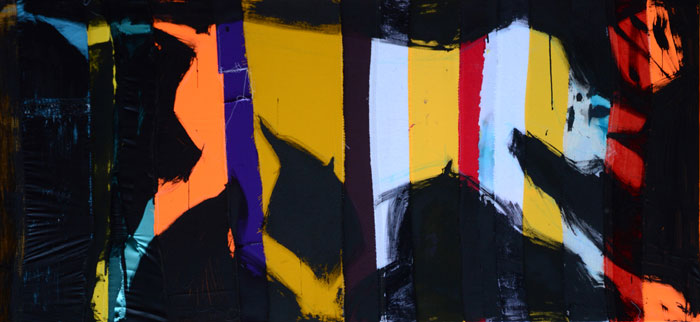
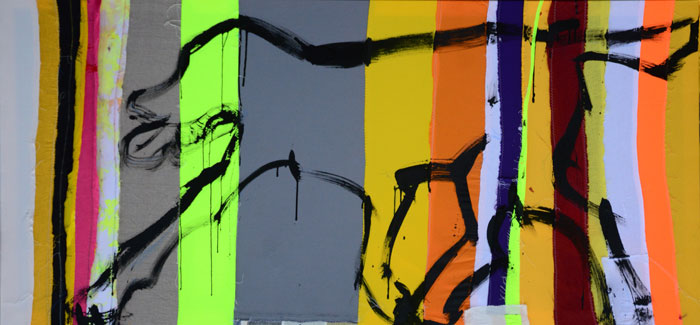
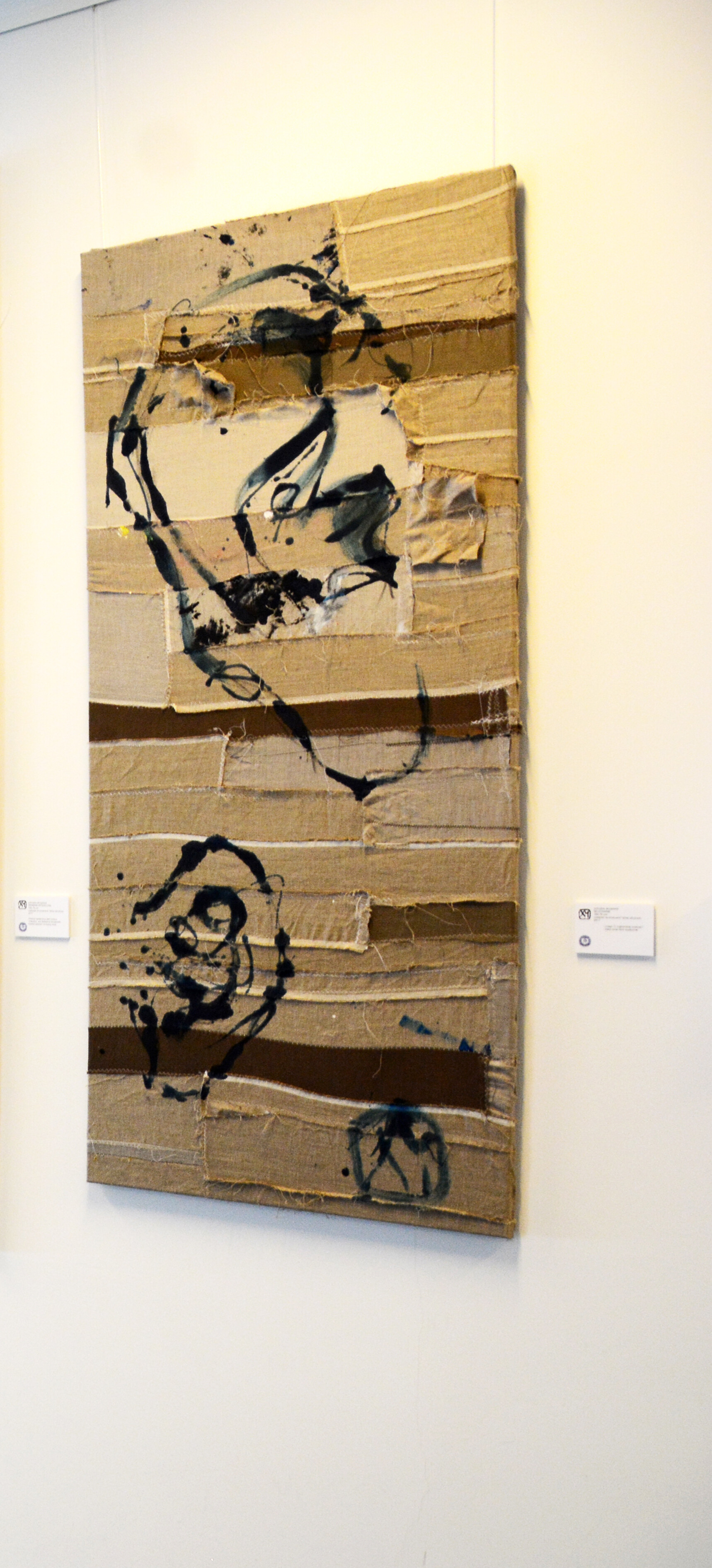
When I stretch canvas or another coloured material onto the loom, there is always too much of it. The edges are cut away only after the image is finished. I have been collecting these colourful strips for years. I have entire sacks of them.
I always knew that one day I would paint a new series on them.
That day is today.
These strips—remnants of all my previous works—become a visual sign of recycling, but also of being caught in a continuous cycle of self-renewal.
I Am Just Ready to Be Me speaks of dissatisfaction and years of wandering: taking fragments of knowledge from successive books and guides, moving from one therapy to another, from one method to the next, scanning reality for an answer to a fundamental question:
How can we live a satisfying life?
And finally, I have come to believe that perhaps it is possible to change one’s identity within a single lifetime.
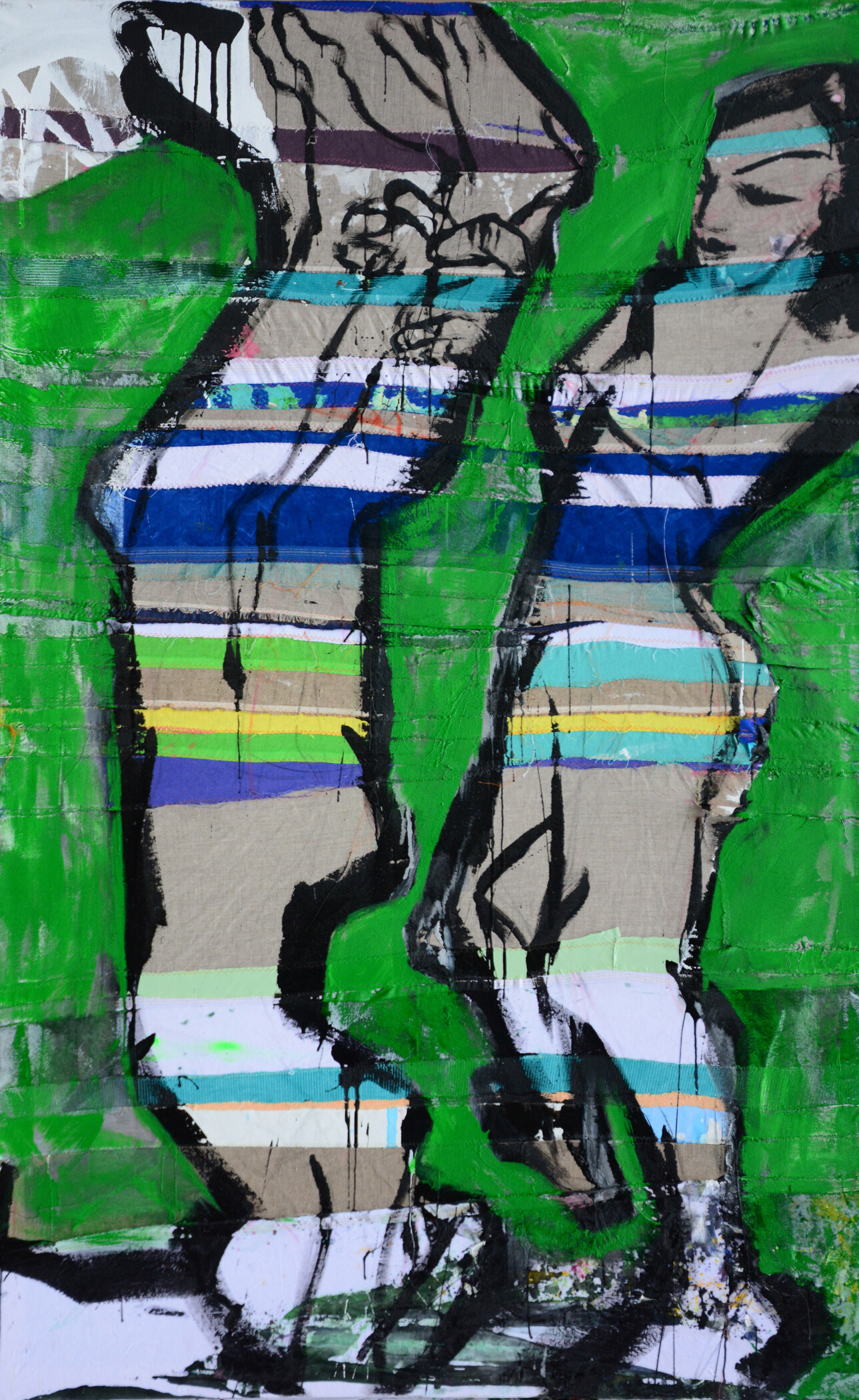
I present the paintings as totems, suspended at a height of 3.5 metres, with all their flesh left visible: the remnants, the loose strips of fabric hanging freely from the works.
The series is structured around six fundamental human needs.
The popular life coach Tony Robbins argues that our decisions make us who we are. We decide which need becomes our number one priority.
Changing those priorities determines the shape of our lives—where we go, and where we ultimately arrive.
I. THE FIRST HUMAN NEED — A SENSE OF SECURITY
1. Table
The table as the centre of communal, family, and social life—a dense, important moment of encounter. Real conversation. Strengthening one another through exchange.
The table is infinite.
It does not have four legs. It has as many as necessary.
There are as many places at the table as necessary.
And perhaps the table is also an instrument of torture: a place where I feel the abyss of loneliness opening among people I want to come closer to, but do not know how.
2. Traditional Table
Our connection to ancestors, spirits, beliefs, customs, rituals, ceremonies, language, and place.
The table is the bloodstream of our beliefs—a map, a set of directions inherited from those who came before us.
3. Man Holding the Earth
A man who acts.
He cleans, sows, bends, works, struggles.
Respect for labour. Being close to the earth. Close to truth.
The closer we are to the earth, the higher we can fly.
To belong to one’s soil, field, and place. To be rooted.
A wonderful necessity of being human.
Our bodies keep us close to the ground. And perhaps that is exactly as it should be.
We draw strength from the earth, from trees, from wind.
(The film Bobbi Jene / Docs Against Gravity: the protagonist’s partner decides not to leave Israel with her for the United States. He chooses to remain where he grew up, because this is where he belongs.)
4. Girl Carrying the Whole Earth
I carry the whole world—physically, emotionally, financially.
In desperation, my first impulse is to paint furious, agitated, predatory faces.
And then I transform them into their opposite.
5. H₂O
We are nature.
We are made of the same elements.
II. THE SECOND HUMAN NEED — CHANGE, VARIATION, FLUIDITY
Uncertainty. Problems. Surprise. The unpredictable. The excitement of not knowing what tomorrow will bring.
6. Balance
Standing on one’s head.
Making attempts.
Changing.
7. Witch
A girl on a broomstick.
Intuition.
Everything the body knows, even when we cannot name it or articulate it.
There is no need for words.
Most of humanity does not define reality. There is no need to formulate everything.
People have always lived, to a great extent, intuitively.
III. THE THIRD HUMAN NEED — RELATIONSHIP
Mother. Father. Friendship. Intimacy.
8. Mother
The experience of closeness.
Organic attachment. Too much closeness. The absence of distance. Total immersion, total union.
The automatic inheritance of a value system from our parents, from our mothers—and only later, perhaps, its correction.
A tangled relationship, full of chaos, attraction, and escape.
The original pattern for every relationship that follows.
“Mother was the first land I ever knew…”
9. Father
The hole left by a father?
The shadow of a father?
The dream of a father?
Who is the father?
10. Friendship
To love is to have time.
To see.
Not to correct.
To act in the interest of the person we love.
IV. THE NEED TO BE ACCEPTED, TO MATTER, TO BE VALUED, TO BE SEEN
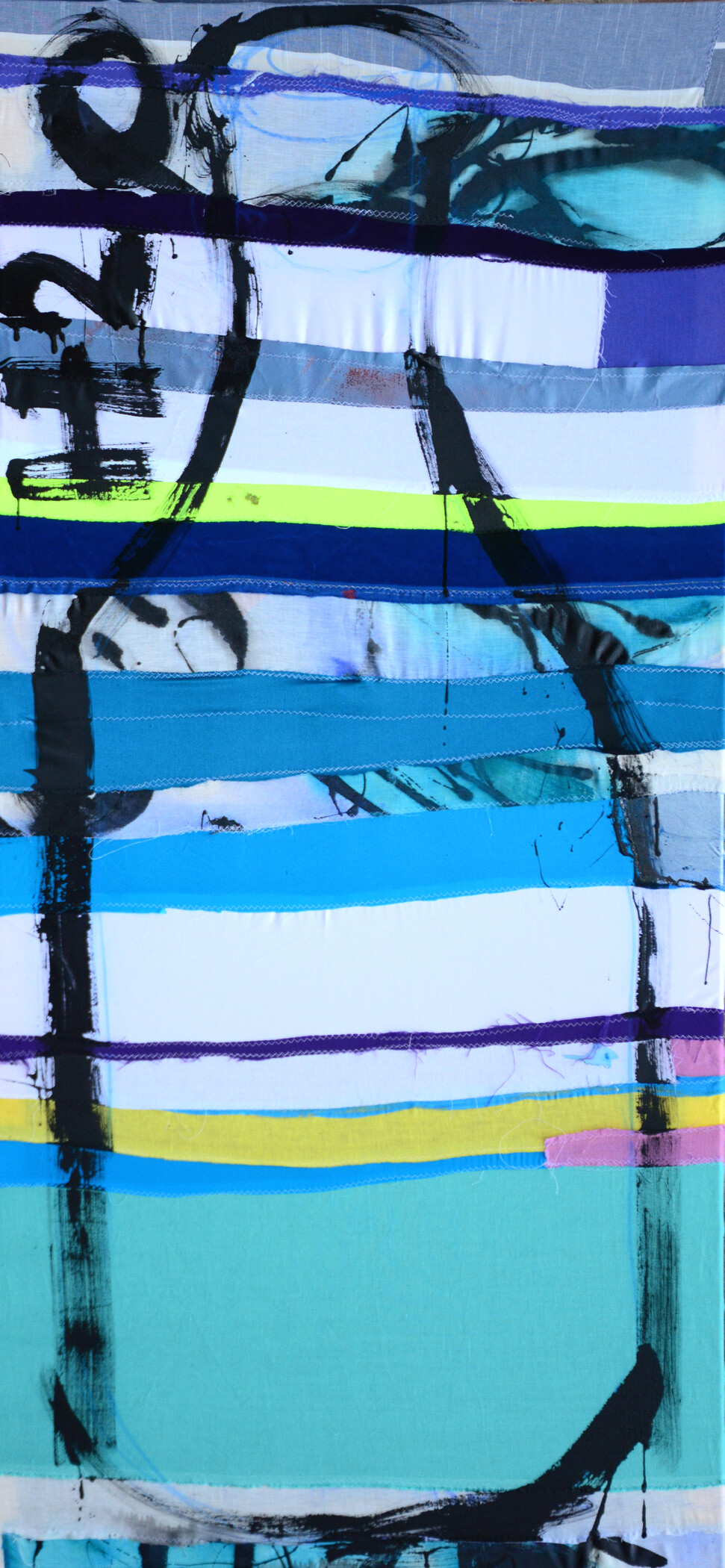
11. Ladder
Success has two sides.
Success can mean paying a price: exposure to loneliness, rejection, hostility, envy.
John Lennon. Andy Warhol. Jean-Michel Basquiat.
Where would we be without the ambition of Charlie Chaplin, Zaha Hadid, and others?
Great visionaries who, through persistence, created things of which humanity can be proud.
The ladder is narrow and unstable. Its rungs are delicate.
It must be approached carefully.
Wisely.
12. Bee
Work as honour.
Work as privilege.
V. A HIGHER HUMAN NEED — THE NEED FOR GROWTH
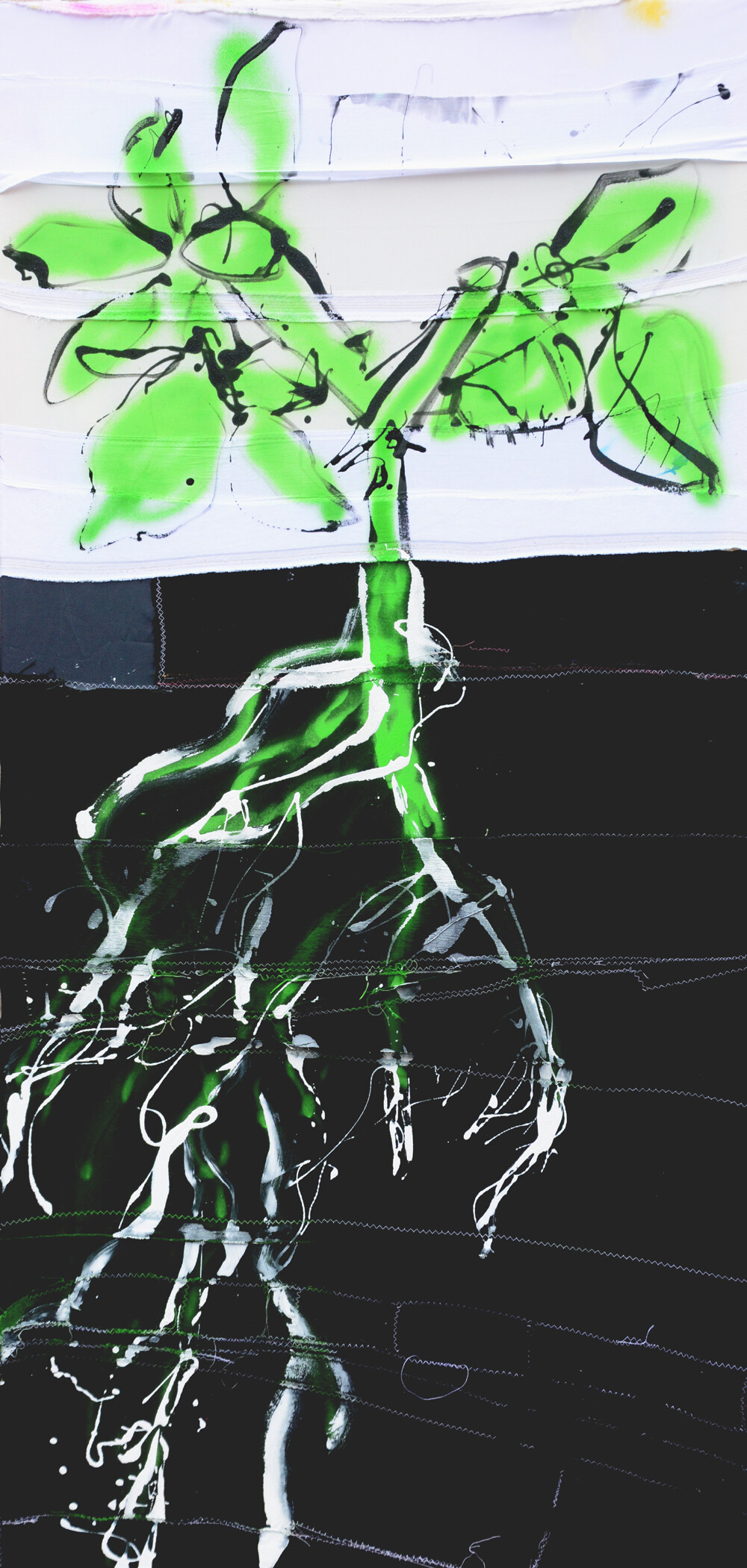
13. Growing
The rose.
First, growth happens downward—in silence, in darkness, into oneself.
Most of the work takes place without witnesses.
Sometimes a leaf appears.
Sometimes, even, we bloom.
14. Key
Always being searched for.
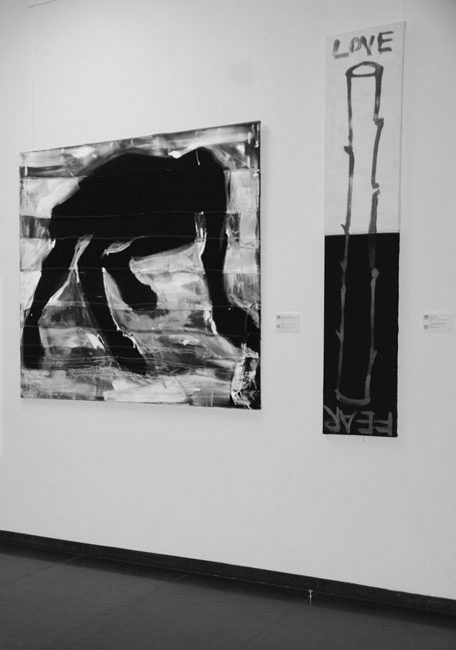
15. Love — Fear
Every stick has two ends.
What is driving me now—fear or love?
Can I let go of fear in this particular situation?
This work emerged from a conversation with the therapist Edyta B., who said:
If we could get rid of fear, nothing would stand in the way of love.
16. Ladder / Barrier
The same image.
Vertically, it is a challenge.
Horizontally, it becomes a barrier.
17. Thermometer
A thermometer guaranteeing the ideal state of mind.
VI. A HIGHER HUMAN NEED — GIVING, SHARING
18. Ear
Listening as a gift.
19. Freedom
Happiness that becomes contagious.
20. Treasure
Giving is receiving.
21. Soul
It shines at the centre.
At the edges, it becomes stained.
In certain places, it falls into an abyss.
Acknowledgements

© 2026 ANKA MIERZEJEWSKA XY