2019 "Skate"
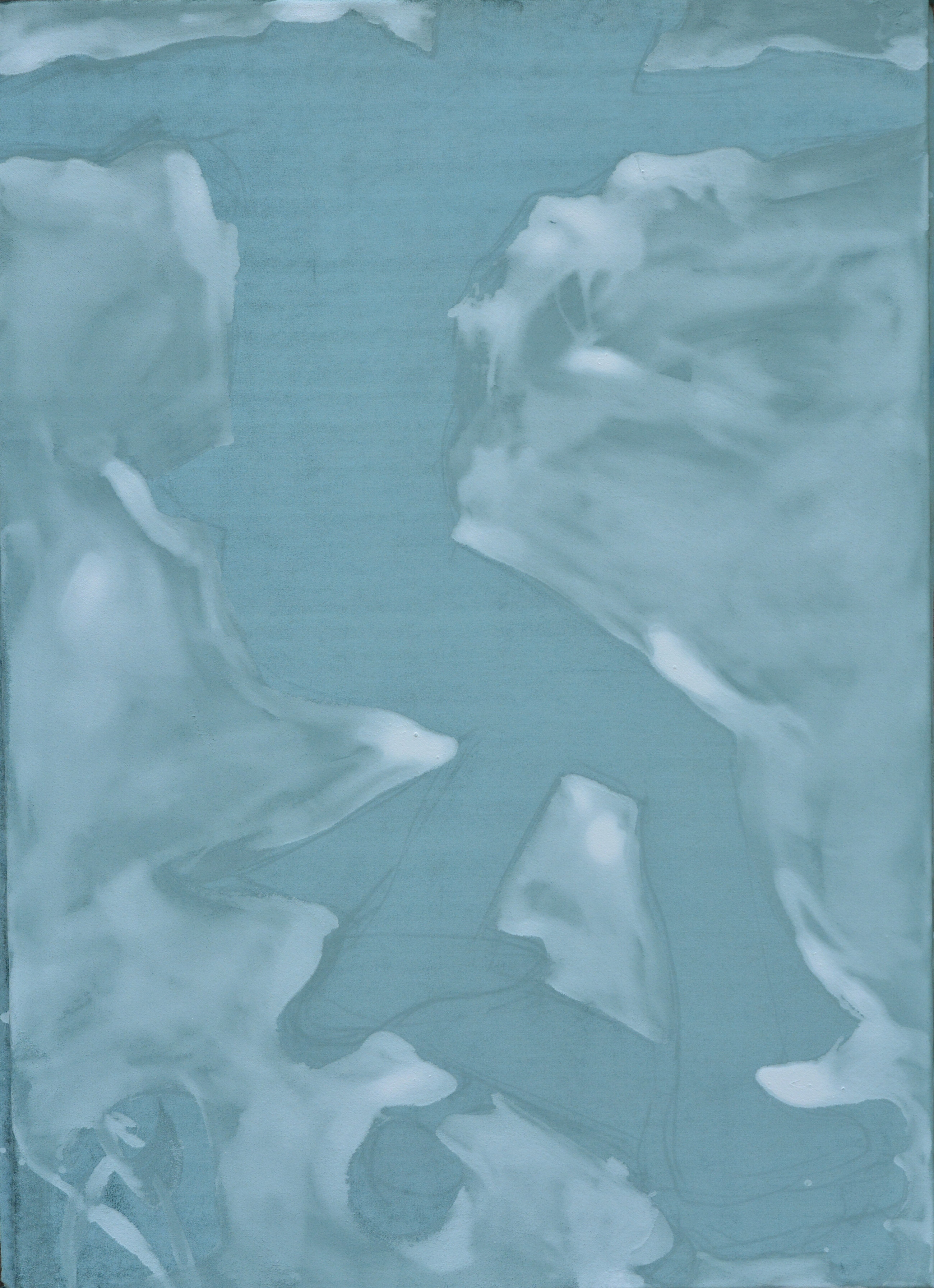
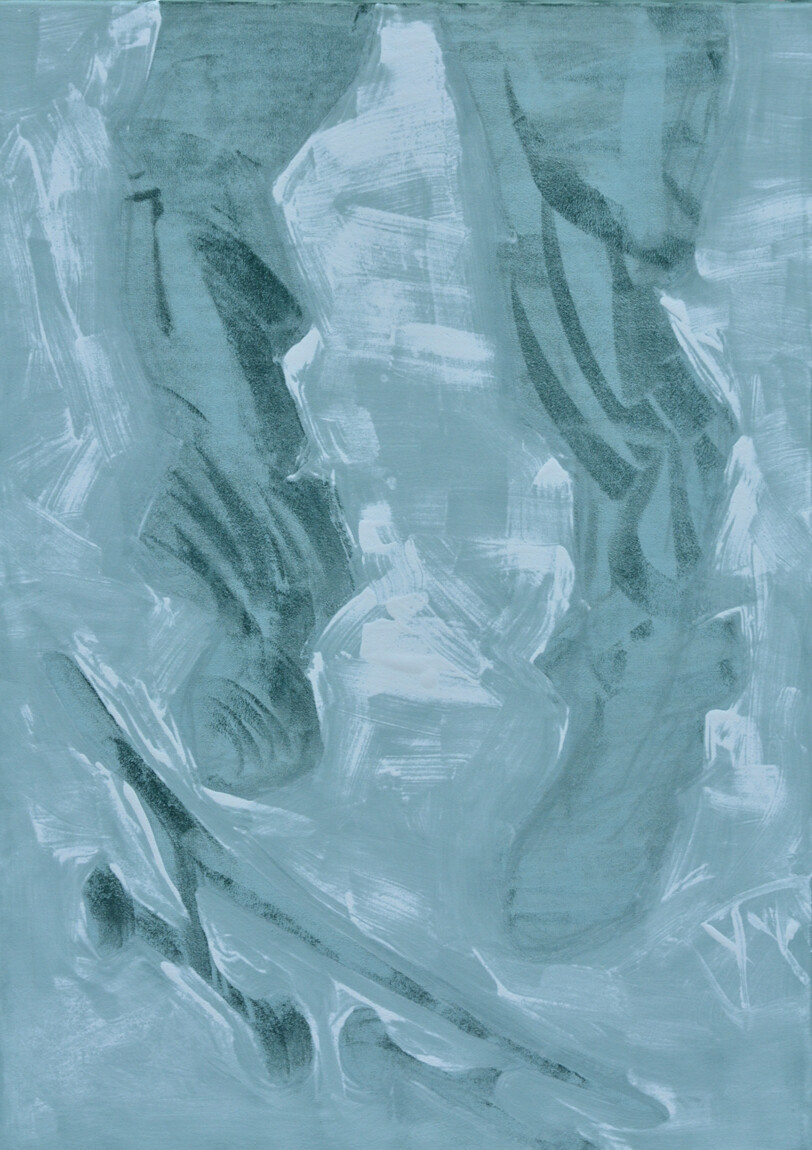
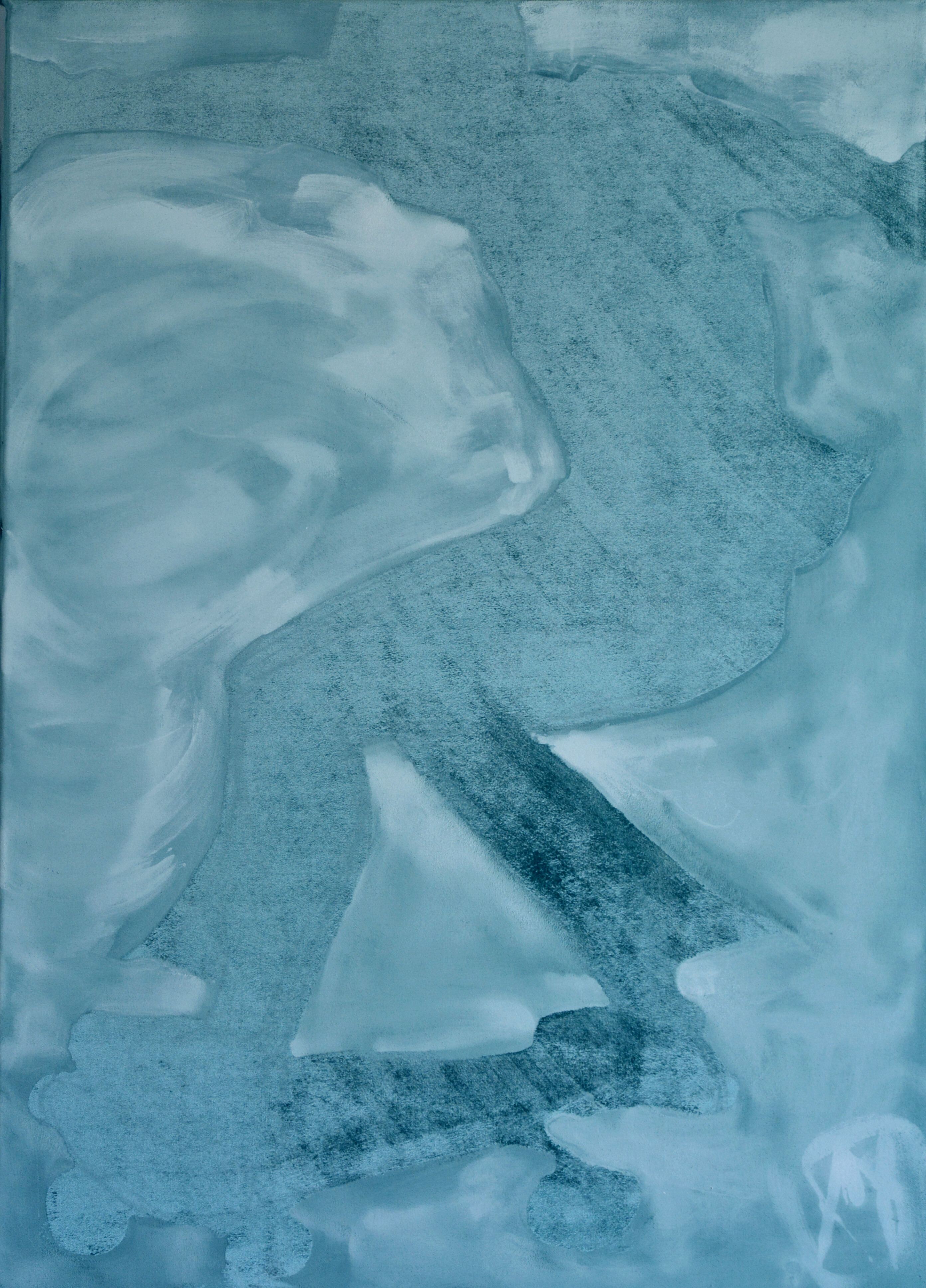
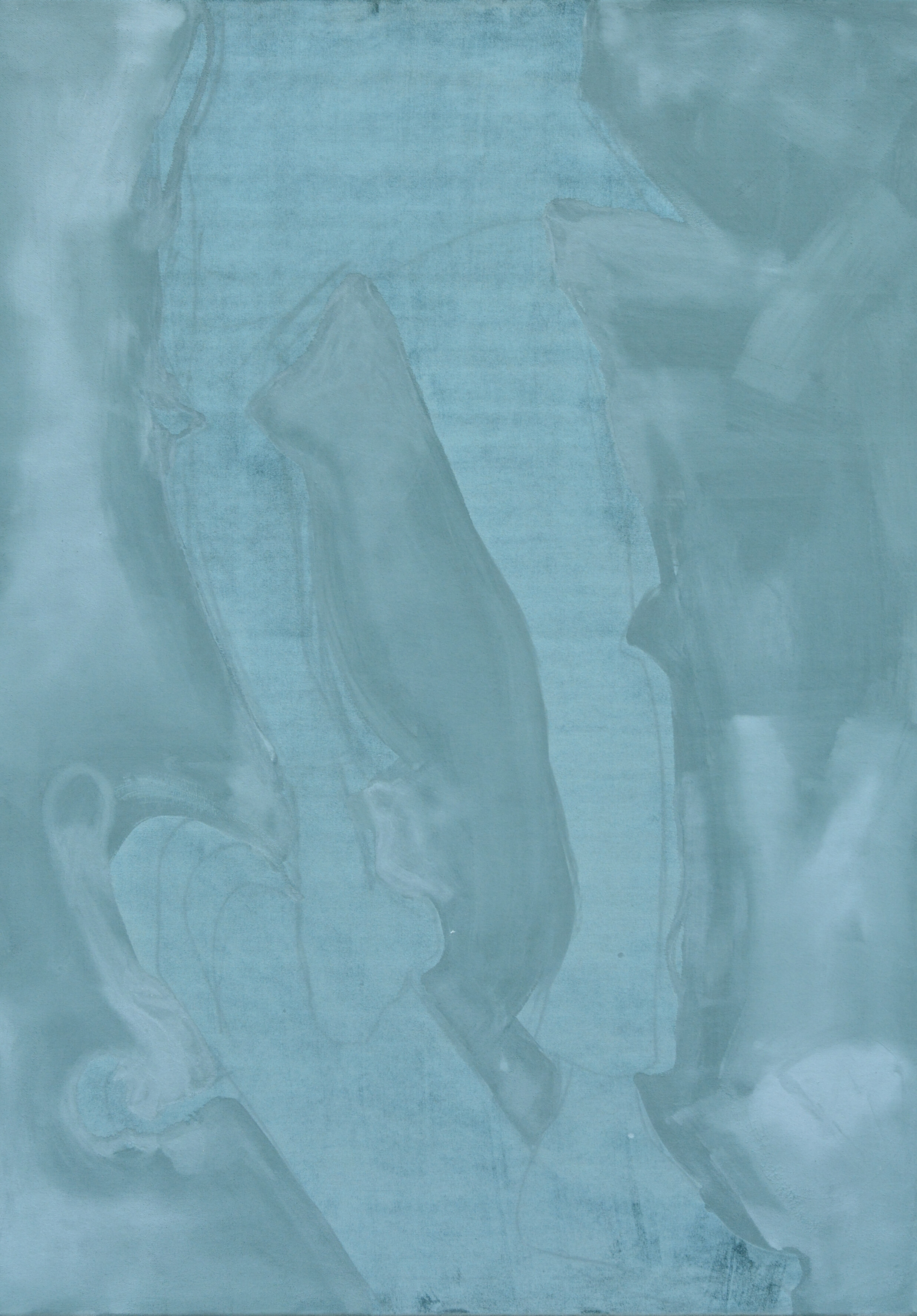
acrylic on velvet,
each 140 x 100 cm (55 1/8 x 39 3/8 in)
vertical
SKATE is a series of monochromatic paintings made with white acrylic on velvet. The ground is a silver, faintly turquoise tone, so delicate that it is felt before it is seen. It is the only color in the series.
The velvet is central to how the works operate. Its pile reflects light unevenly, and its tone shifts with the viewer's position and with the direction in which the surface is brushed. A single panel can appear lighter or deeper, cooler or more neutral, depending on how it is approached. The white paint rests on this unstable field with minimal intervention.
Mierzerzejewska has used this material before. In 2007 she painted a series of gymnasts on velvet, built on two colors. The first was the color of the velvet itself, left untouched, which held the female body as a fragile space. The second was acrylic, applied roughly around the figure, so that the body appeared surrounded by something sharp, like the needles of a cactus. The works carried a feminist reading of the female body as a body exposed to danger. In SKATE, made more than a decade later, she returns to the technique with a different conceptual ground. The velvet is the same in every painting, the figure is now painted rather than left bare, and the subject is no longer vulnerability but autonomy.
On first encounter, the paintings may seem empty. The viewer registers a luminous surface and little else. Only with time does the eye find a figure: a skater, suspended between the ground and the air. Once seen, the image remains, though it never fully settles. The act of recognition is part of the work.
The skater belongs to a figure Mierzerzejewska has returned to many times: the acrobat. She has painted acrobats in many ways over the years, and the two figures now hold the same idea together. Both test the body against gravity, and both live by their own rules, slightly outside the ordinary order of things. In painting, the acrobat has a long history, from Degas and Seurat's circus scenes to Picasso's saltimbanques and Léger's performers. The skater is its contemporary counterpart, an acrobat without a ring or an audience, who turns a stone yard into a stage for their own decisions.
The series draws on two experiences. Nights spent sleeping on the Sicilian coast gave the artist a sustained view of sky and sea merging at the horizon into one continuous field of color. Later, in a stone yard behind the Palais de Tokyo in Paris, she watched skaters launch themselves over concrete. In both she recognized the same sensation, and the same color. She describes it as the feeling of being free.
"Autonomy is the most important thing for a human being," the artist says. "People will kill for it and die for it. They defend it in wars that last for years."
SKATE is one of several significant bodies of work in a practice that spans more than thirty-five series. Skaters and acrobats are among its recurring figures, and for Mierzerzejewska this series marks the point at which a long-held idea became precise.
© 2026 ANKA MIERZEJEWSKA XY